

In the age and time of the digital world, Google has made its algorithm most intelligent in judging the quality of the page, the experience of the user, and the fulfillment of the intent. With hundreds of results being perused every day, Google promotes the pages that bring clarity, authority, utility, and satisfaction.
It implies that you should not only have keywords or word count; you just need to provide answers to actual questions, minimize friction and build trust, and make readers work their way to understanding what you have to say. As your systems identify that users have been spending a longer time on your page, come back to it, give it out, or act on it, you are automatically ranked higher by Google. Thus, the making of good content is not merely being able to pass such checkboxes in the algorithm, but being able to have the art of engagement.
1. Learning the Google Ratio of the High-Quality Content
Content is rated at Google by machine intelligence, human quality raters, and signals of user behavior. The heart of this analysis is the E-E-A-T model adopted by Google, which is Experience, Expertise, Authoritativeness, and Trustworthiness. All these four components will either make or break your content to be at the top of the search results.
- Experience tells whether the producer has personal experience with the subject matter. Experience is an assessment of the depth and precision of knowledge.
- Authoritativeness is used to check the websites in the larger web that see your site – citations, backlinks, and reputation count in this situation.
- Lastly, trustworthiness is concerned with honesty, transparency, precision, and safety. Web pages that deceive, exaggerate, or promise less than they promise naturally fall in the ranking.
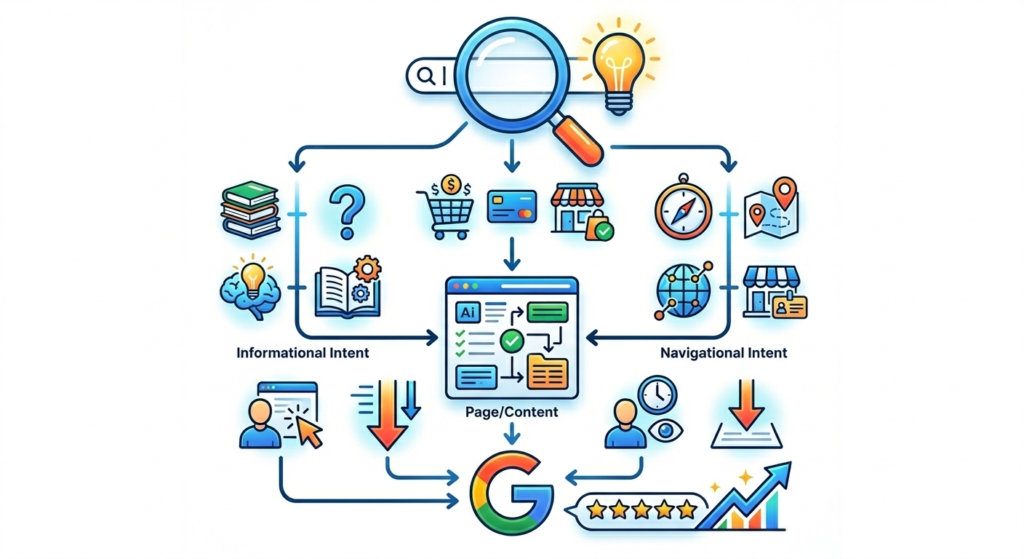
2. User Intent: The Content Evaluation of Google
The algorithm of Google has developed such a way that it ranks the user intent first. It not only matches keywords but also attempts to discern what the user is about. The intent is usually divided into three, namely, informational, transactional, and navigational. Good content is in anticipation of such needs, where it responds to questions without compelling the user to go to another place.
When a searcher clicks on a page, Google monitors his or her behavior of whether he or she will remain, scroll, browse, or bounce. These are minor indicators that Google uses to determine how useful your content is to the intent. That is why it is more important to be clear than to be detailed. Never hide answers behind text walls. Instead, have step-by-step readers that are organized in sections with appealing headings, logical flow and explanation in a conversation format.
3. The Art of Making Content Readable, Accessible, and Scannable
Readers of the modern world do not read websites like books; they skim to add value. Google understands this and rewards those pages that are easy to read as well as navigate without any problems. This translates to shorter paragraphs, good spacing, easy language, and strategic visuals. The meaning must be in every line without cluttering or overwhelming.
It might be a good idea to use strong keywords, italicized underline, and some lists to enable skimmers to locate the required information in the shortest time possible. Headers should take the users safely through the page, as well as support the relevancy of the keywords. The use of transitional words such as however, more importantly, and in addition makes the reading process easy and continuous. Google uses page experience, which includes readability, and such content that is either too dense or too technical tends to perform poorly.
4. The E-E-A-T Power in Trust Building and Higher Ranking
Google E-E-A-T principles are similar to the trust indicators, which can be used to decide on the quality of the content. In order to apply Experience, tell personal stories, actual case studies, or first-hand observations. This demonstrates to Google and the readers that your knowledge is legitimate. Authority is acquired through experience: carefully analyzed statistics, professional views, stepwise tours, and professionally finished instructions.
This is gained as time progresses by mentioning, linking, and having a good brand presence; in other words, your content is recognized as reliable. The most important thing is credibility. Google blocks the materials that seem deceptive, unverified, or poorly sourced. Including transparency, author bios, citations, disclaimers, and realistic information increases the level of trust. The trust is even shown by such little aspects of the design as secure connections (HTTPS), a well-restrained layout, and limited pop-ups.
5. The importance of Freshness and Depth to Google
Google prefers information that remains up to date. This does not necessarily imply publishing on a daily basis; it implies updating your pages when you get new information. Freshness conveys the message that your website is not dead, maintained, and accountable. Google is more likely to rank the page higher when it realizes that it is frequently updated. Freshness will not bear your content.
Depth is equally important. Google does not like shallow pages, which are placeholders. Rather, explain your content in more detail, in more context, with examples and steps to be taken. Depth reduces pogo-sticking as well, whereby users will ping-pong between your site and other websites in search of superior information. Google considers pogo-sticking is a warning sign that the content you provide is not complete.
6. The Role of Structure, Formatting, and On-Page Optimization.
A properly designed web page is simpler to read and comprehend by the users and Google. A good structure should be initiated by a good hierarchy: a strong title, structured headlines, clear paragraphs, and substantial sub-sections. This structure is used by crawlers in Google to get to know your page and associate it with queries. You are then further visible through on-page optimization.
Insert your main keyword in the title, the introduction, the URL, and the meta description, and at the natural points within the content. Add secondary keywords to increase relevancy. However, do not overload the search with keywords; Google punishes unnatural repetition. Considerate format is also important. Bullet points should not be used everywhere; they should be used only where they make the message clear.
7. Producing Content that Provides True Value
Google systems have now become unusually proficient in detecting filler or repetitive content as well as thinned content. Google rewards content that has nothing substantial as opposed to pushing its content to the frontline, which creates actionable, practical value. In order to do this, every paragraph ought to inform, answer, reassure, or guide. Do not be repetitive, overly wordy, or use generalities.
Authenticity is worth real value- sharing of the steps that can be followed by the readers, the examples that they can comprehend, as well as the knowledge that they can apply and put into practice. Consider the more profound motive of the search query. What is the reader afraid of, frustrated by, or wanting? Once you hit these needs, the content is no longer information but a real solution. There is no need to state that value-rich content is easily shared, bookmarkable, and interaction-friendly.
8. Importance of Behavioral Signals and Satisfaction with Users
User satisfaction is of great importance to Google since it determines the content of whether the promise it makes is met. Dwell time, bounce rate, click-through rate, and repeat visit are some behavioral indicators that Google uses to identify pages that are trusted by the user. In the event that a visitor leaves a page in a hurry, Google concludes that it did not satisfy its visitor.
However, when they remain, scroll, engage, or browse, the algorithm assumes that it is a sign of satisfaction. As well, page speed, mobile friendliness, and intuitive design have an impact on behavior. Even writing has a tone of influence on satisfaction. Skimmer-friendly content (clear headers, predictable format, digestible insights, etc) will help the user spend more time reading the content. And the more time you remain in Google, the more it believes that your content is useful.
Conclusion:
In the mind of Google, good content is content that creates a feeling of value in a way that is so evident and in a manner that will be identified by users as well as algorithms. It is a combination of E-E-A-T, robust structure, intent clarity, legibility, and clever optimisation. Google pays attention when your content is informative, interesting, and fulfilling, and then it will reward you with exposure.
