
SEM in 2025 is no longer the act of filling the world with advertisements by using sweeping keywords. It is about knowing the purpose, managing information, and maximizing each click to make a conversion. The key elements of this campaign were high-intent search behavior, closely organized ad groups, conversion-optimized landing pages, and performance tracking in real-time.
Each dollar that was used was not wasted. We also cleared off early trash, doubled up on what was converting, and kept on perfecting our message. The outcome was the predictable engine of lead generation that scaled within a short time without compromising on lead quality. In this article, we have identified the specific SEM framework that we followed, including keyword research, optimization loops, and so on, which you can implement in the context of your campaign.
Goal Defining and Construction of a Conversion-First SEM Framework.
The initial measure towards making 1,000+ leads was a total understanding of the objective. Traffic, impressions, and brand awareness were not the objectives. Cost-effective lead acquisition was the only measure that counted. The decision was clear, which influenced all those who followed. We established the definition of a qualified lead and matched it with the sales funnel, and designed campaigns based on the conversion actions instead of clicks.
In 2025, the success of SEM will rely on the ability to match business goals with platform algorithms. We established conversion tracking before rolling out one advertisement so that each lead was quantifiable. The budgetary allocation was directly linked to performance requirements, not presumptions. We also divided campaigns into the level of intent in order to separate research inquiries and purchasing-ready searches. This system has removed the guesswork and provided a feedback mechanism for data-directed optimization.
Super High-Intent Keyword Research That Refuted Wasted Spend.
This campaign relied on keyword research; however, we did it in a different way as compared to how it has always been done. We did not pursue the high-volume keywords, but intent-driven phrases that indicated a need and were urgent. In 2025, engines know the context, thus relevance is more important than the volume. We examined the search terms which were reflecting readiness to act, including solution-based search, comparison of services, and urgency-based terms.
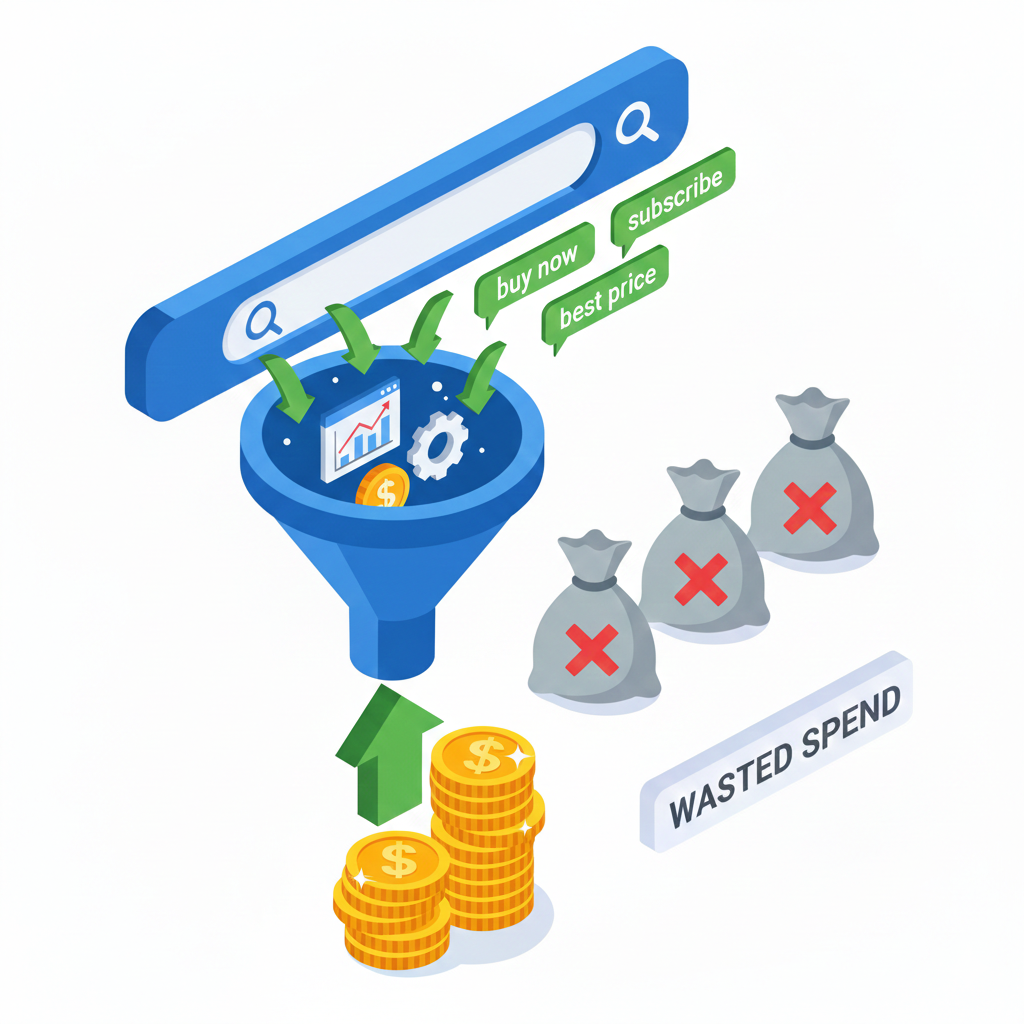
Negative keywords were equally important. Through the vigorously filtered low-intent and informational searches, we saved the budget on irrelevant clicks. We also bundled keywords closely together to make ad copies strongly relevant to search intent. This enhanced the Quality Scores, and the cost per click was reduced tremendously. The long-tail keywords had lower impressions but a high rate of conversion and thus faster generation of leads. The outcome was that traffic was cleaner, the signal of engagement was stronger, and the structure of the campaign was based on precision instead of scale.
Organizing Campaigns and Ad Groups for Relevance Optimally
The ad performance was decided by the campaign structure. We have not engaged in grandiose campaigns that have dozens of loosely related keywords. Rather, we developed closely themed groups of advertisements where one group was a group of a particular issue or solution. This enabled us to create hyper-relevant ad copy that reflected the specific words that the users entered in the search engines. Relevance had a direct effect on Quality Score, which reduced expenses and augmented impression share.
We split branded, non-branded, and competitor campaigns to be able to independently control the messaging and bidding techniques. The performance was further segmented based on geographic and device segmentation, which enabled us to optimize the performance based on the user behavior pattern. In 2025, the platform automation gives rewards to a clean structure as it enhances the accuracy of prediction. We were able to exert more control and not less by providing algorithms with clear signals.
Creating Ad Copy that Generated Clicks and Pre-Qualified Leads
The ad copy was not created to appeal to everybody; rather, it was created to appeal to the right users. We spoke plainly instead of being cunning and plain instead of being exaggerated. All headlines reflected a pain point, and the descriptions supported the solution and expectations. This minimized low-quality clicks and maximized the conversion rates. In 2025, users will be very demanding, and ambiguous messages will be dismissed.
We experimented and experimented, and tried to emphasize value propositions, urgency triggers, and trust triggers. Ad extensions were also significant since they provided context, credibility, and touchpoints. Snippets, callouts, and sitelinks were structured and provided greater visibility and click-through at no additional expense.
The ad copy items that we optimized were:
- Problem-oriented headlines matched the purpose.
- Instant advantages rather than generalized promises.
- Powerful appeals to action that sieved serious users.
- This strategy secured the clicks of the users who were willing to convert.
The Landing Page Optimization That Converts Clicks to Leads
There is no use in generating traffic without having a landing page that is conversion-friendly. The design of our landing pages had a single aim, which was to eliminate friction and direct users into action. We ensured continuity and trust by matching the landing page messaging to the ad copy. The users will demand immediate clarity in 2025. The subheadline displayed how the solution would happen, the core problem was covered in the headline, and the call-to-action could be seen without scrolling.
We have cut the irrelevant navigation in order to maintain concentration on the conversion objective. Credibility was strengthened by social proof, a trust badge, and benefit-focused, concise copy. The speed of the pages and the ability to operate on a mobile device were an absolute must since most of the traffic was through mobile devices. We also clustered the form fields as much as possible in an attempt to reduce drop-offs as we acquired vital qualification data.
Fast Scaling Budget Allocation and Bid Strategies
Budget control played an important role in achieving 1,000+ leads within 30 days. Maximum spend was not our starting point. We instead climbed aggressively but wisely. First budgets were not risky, and we could find winning keywords and advertisements without too much risk. We only increased the amount that we spent on high-converting segments once the performance benchmarks had been reached.
Depending on clean conversion data, automated bidding strategies were selected selectively. Smart bidding is most effective in the year 2025 when there is accuracy in the inputs. We were tracking cost per lead by the day and bid optimization depending on intent and device, and time of day. Poor-performing segments were put on hold in a short period to eliminate budget leaks.
Conversion Tracking, Analytics, and Optimization Loops
Data visibility was what actually drove this campaign. We monitored all the significant interactions, not only the final form submissions. Micro conversions like button clicks, depth of scroll, and the start of a form helped to gain insight into the user actions. This enabled us to diagnose with speed and precision, and optimize. Optimization cycles on a weekly basis aimed at optimizing keywords, ad copy, and landing pages according to actual user behavior.
Major optimization measures were:
- Stopping high-cost and low-intent keywords.
- Enhancing winning search terms to additional ad groups.
- Updating advertisements to avoid boredom.
This process of continuous improvement maintained the performance high during the 30 days.
Conclusion:
Using SEM gives you a chance to generate 1,000+ leads within 30 days when a strategy is used instead of guesswork. The trick is in the targeting based on intentions, effective structure of campaigns, conversion-oriented design, and continuous optimization. It is not a matter of doing more in SEM in 2025 but rather doing better. When all the clicks are not in vain, and all the decisions are supported by data, growth becomes predictable. This structure is not specific to a single campaign or niche. It is a roadmap towards scalable lead generation. SEM can be made a dependable growth engine by emphasizing quality, relevance, and measurement. Once these principles are put into practice, it will not be an exception but rather become th
